
Musa al-Gharbi on Academia, Nikole Hannah-Jones, and the Great Awokening(s)
The Forum sits down with Musa al-Gharbi, author of We Have Never Been Woke
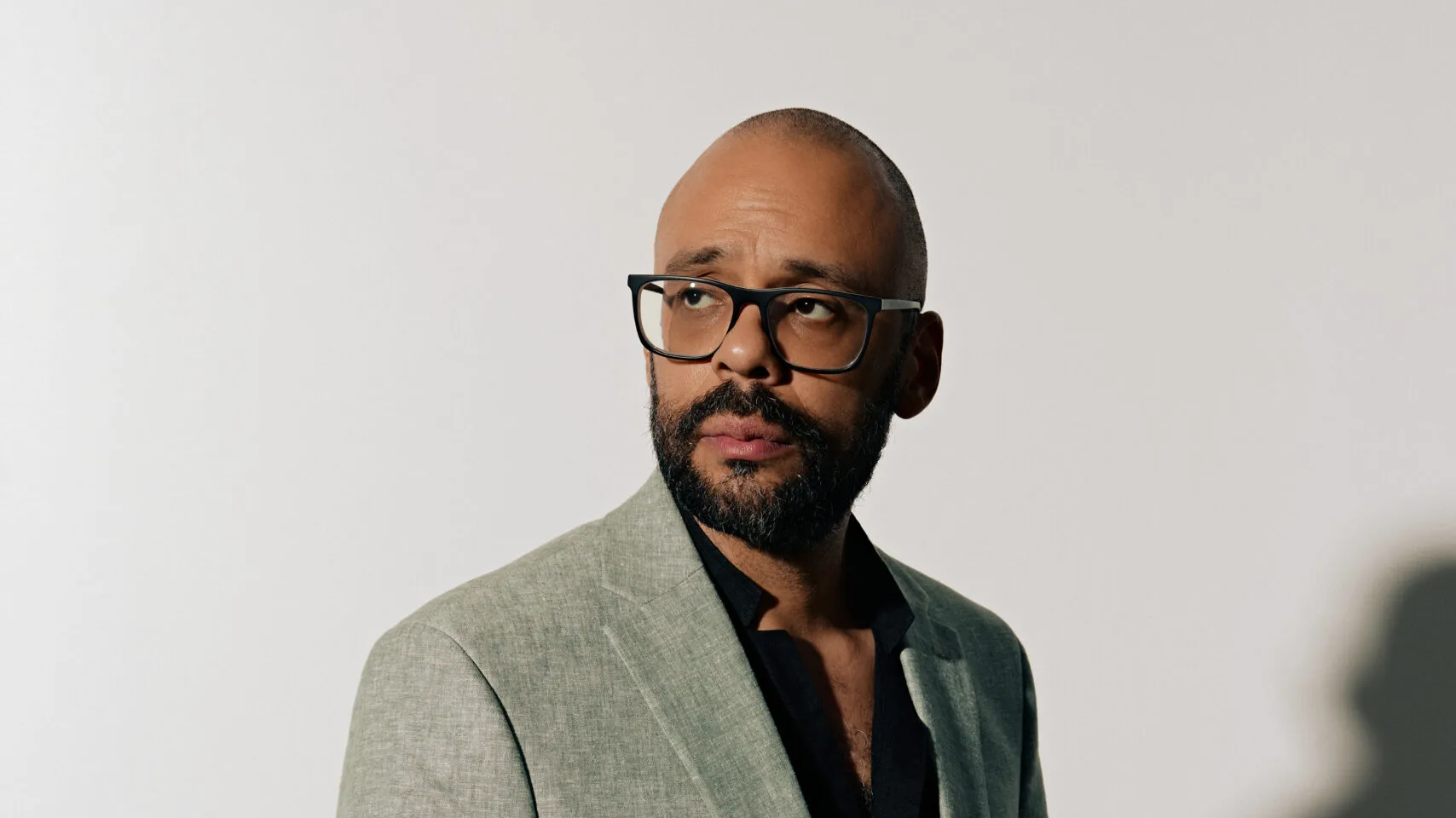
Shiv Parihar: Hello and welcome to The Forum, sponsored by the Salvatori Center for the Study of Individual Freedom in the Modern World. Today, we're honored to be joined by Musa al-Gharbi, professor in the Department of Communications at Stony Brook University and author of the best-selling book We Have Never Been Woke.
You have a PhD in sociology, although you're not in a sociology department right now, and you're kind of a black sheep within the field. Can you tell us a bit about changes you might want to see in how academic sociologists do their job and conduct their research as a whole?
Musa al-Gharbi: I had an interesting time on the sociology job market. At the time that I went on the job market, I had nine journal articles, I had a book under contract with Princeton University Press — about as good as you can get in terms of academic books — I was coming from Columbia University, I had glowing letters of recommendation. I check diversity boxes for whatever it's worth, as a Black Muslim scholar from a nontraditional academic background. One would think that someone like me would coast through the job market, but not so.
One of the problems that I have is that my work is really interdisciplinary. I had two big problems related to [We Have Never Been Woke]. There was uncertainty, even on behalf of the publisher, who took a little bit of a risk publishing this book — basically, was this book going to be a dud? Are the wrong people like J.D. Vance or Joe Rogan gonna like the book and talk about it? That inhibited my job prospects, because there's a lot of risk aversion in academia.
Second, the book makes some really challenging arguments about the contemporary left, about a lot of the moral discourses that pervade the academy, and those are often not well received. At one of the talks I was the shoo-in for this department, so they had me do a job-talk on my book. I did my talk, and the very first question out of the gate was something like, “I could see how your arguments would apply to me as a white woman, but what about my kid who's Black, who's mixed, or my husband who's Black? Do your arguments apply to them too?”
The only response I could give that was faithful to the argument of my book is: “If there's a relationship or a state of affairs that's oppressive or exploitative, it doesn't suddenly become good because a Black person is doing it. The problem is the oppression or the exploitation, not that the wrong people are being oppressed or the wrong people are doing the oppression.” I was like, “I passionately don't want to talk about your family, I guess your husband and kid are part of the problem too.” She hated that answer. It was just downhill from there.
I applied to hundreds of jobs; no one would hire me. In the last cycle, the cycle where I actually did get a job because I applied outside of my field, I did the most boring talk that I could imagine — it was just a methods talk. In my one-on-one interviews after that talk, people kept coming up to me and saying, “I got to tell you, it's really brave of you to come in here and do this talk at this place.” And I was like, “Brave? I did a methods talk to a bunch of nerds. Brave? If that's brave to you, that's an indictment of the discipline.” It is indicative of the really aggressive risk aversion and boundary policing that's not particularly healthy.
The 2016 election was one of the biggest collective prediction failures in modern political history. So, you would think that a lot of the people in journalism and academia would take a step back and go: “What did we get wrong?” That's not what happened. Academics and journalists spent the years after Trump's election, producing volumes of research blaming the voters. There’s this whole genre of literature [for which the] literal design of the study is: “Which negative trait best explains why someone would vote for Donald Trump? Is that they're racist, or that they're sexist, or that they're authoritarian?”
You could never design a study on: “Why would someone vote for Kamala Harris? Is it that they're atheists, or they hate America?” If you designed a study like that, you would absolutely find a positive association between irreligiosity and democratic vote share. You would certainly find an association between low levels of expressed patriotism and democratic vote. But social scientists don't actually study why people vote for Democrats. It doesn't even occur to them as a question, “Why would someone vote for Barack Obama?” It seems obvious to them: “Duh, he's the better candidate.”
Sarah McPeek: I read Tyler Austin Harper’s article about leaving Bates College and thought a lot about the phenomena in academia you describe in We Have Never Been Woke. I'm curious about your thoughts on that.
Musa al-Gharbi: I have a couple of essays where I've kind of written similarly about my experience in elite academia. I started at community college — there's this whole weird set of life events that ultimately resulted in me getting to go to Columbia University. Now, when I ask myself, “Why did Columbia University want me?” I can tell a meritocratic story about why that's the case. But if I'm being fully honest with myself, there were probably a lot of other people in the PhD application pile who also had published before and who also had good standardized test scores. One thing that I had that they didn't have was a non-traditional background — and I'm Black, and I'm Muslim.
I have an essay called “Unfortunate Things” that looks at Jason Arday, the sociologist who took his own life after being exposed for fraud, comparing our respective experiences in sociology. Columbia, that year that I was accepted, had a cohort of 12 people that they admitted — I was the only Black student that they admitted, and at a school like Columbia, it would be unacceptable for them to admit like a purely white cohort. As a consequence of that, I didn't have to be better than all of the other applicants who applied, I just had to stand out compared to the Black applicants. That worked out well for me, but there's something really alienating and disturbing about being lifted up a lot as a result of these non-academic factors.
You're expected to offer the Black perspective, and I think that's true of Tyler Austin Harper, of myself, and of Nikole Hannah-Jones. I'm half white, so is Nikole Hannah-Jones, and so is Tyler Austin Harper. I was on a panel looking at polarization in America, and there were four Black people who were part of this event: there was me, half-white; there were two people who were Jamaican; and then there was one person who was Kenyan-Nigerian. There was not one person who was a monoracial, non-immigrant Black person. They're the overwhelming majority of Black people in America, but they're basically absent from almost any elite institution. If you look at the Black writers in The New York Times, almost all of them are recent immigrants, or they're half white.
This is a problem in a few ways. First, because the population that comprises the vast majority of Black people in America is just absent, you can have a lot of policies designed to help those people ostensibly, but that don't reflect their values and interests in any meaningful way. Second, it causes misperceptions, both of the people who are doing this work and of other people who are observing. A lot of people, when they ask, “What do Black people think about policing?” don't consult nationally representative surveys of Black people in America or go out into normie communities and talk to regular Black people and find out what their thoughts are. They go, “Let's look at the Black writers of The New York Times.” But if the Black writers of The New York Times are unrepresentative of the Black community, you can't actually learn much about what Black people think about policing by reading The New York Times, but the readers often don't know this.
So there's just this kind of epistemic distortion that happens in a lot of these institutions. One thing that's always shocking to me is when you look at the people in elite media, who say really villainous things about white people — who have a weird relationship with white people and do all this white bashing — they're often people with a white parent like Nikole Hannah-Jones. She's half-white, and this matters for a bunch of reasons. In a lot of her writing it’s “White people this, white people that.” She would have been loved and nurtured by white people her whole life, not just by one of her parents who was white, but also aunts, uncles, grandparents. Even in terms of her journey into the media, you don't become Nikole Hannah-Jones without a lot of white people in your corner. Most of her readers are white people.
The people who are themselves half-white often have the weirdest fixations about white people in a way that disturbs me. A lot of the claims that they're making are just demonstrably untrue, and they know that because of their own life experiences. But there's this weirdness in elite Black media and academia that seems to have its origin in the fact that almost no one participating is representative of the Black population.
Sarah McPeek: On Nikole Hannah-Jones, I wanted to ask about her most recent article and the backlash that ensued. I thought of it as her attempt to resist the symbolic capitalist urge toward pursuing elite institutions for one's child, but then you saw this great backlash at what she was doing. I was wondering how attempts like that, to resist the tide of elite credentials fit into your thinking.
Musa al-Gharbi: On one hand, I think it's important for progressives and people on the left to live their values, to take risks, to try to help actual people deal with problems instead of trying to fight abstractions and engage in cosmic wars over symbols and rhetoric. So at the high level, I agree with what seemed to be the spirit of what she was trying to do.
I lived in New York City for seven years. I just sent my kids to their zoned public school: it was majority minority, it was a below median school. I didn't think to write a New York Times article about it, but I did invest my children in the local community, and my family was very involved. I think people overestimate, and you can see this in Nikole Hannah-Jones's article, that if you didn't transform the whole system, then [you] accomplished nothing. She basically said that.
There are a lot of things that were disturbing to me when I read [her article]. The first thing was that she didn't send her kid to the zoned public school — she went out of her way to find the worst public school, in a community that she was again not connected to. She just parachuted her kid into the worst school that she could find, and she didn't follow her kid's progress. I was struck by the fact that her kid got all the way through middle school and couldn't do basic math, and Nikole Hannah-Jones herself didn't understand this. My kids, I would help them, I would do their homework with them, and if they got answers wrong, I would tell them that they're wrong. Nikole Hannah-Jones apparently didn't do this; she just expected the schools to do 100 percent of the education for her children. That's an interesting parenting choice from Nikole Hannah-Jones, very different from the choices I made with my own children.
Not included in this essay, but very relevant, was that New York City was going to take students from a more affluent majority white school and integrate them into PS 307 [the school Hannah-Jones’s daughter attended]. If this had happened, it would have raised the average test scores. You would think that Nikole Hannah-Jones would be a big supporter of this move: you would be wrong. Nikole Hannah-Jones fought against this plan on the grounds that it was a yuppie invasion.
I don't know Nikole Hannah-Jones personally, and psychologizing people is a dangerous game. But if I were to guess why she was so opposed to this, I suspect it was because if they had followed through on this plan, that just wouldn't be a compelling storyline compared to: “The author of The 1619 Project single-handedly swoops in and saves this school.” Last thing I'll say about this: The narrative embraced by Nikole Hannah-Jones is that she had really risked destroying her daughter's future. That's crazy, because Nikole Hannah-Jones is a multimillionaire, a MacArthur Genius Grant winner, and a Pulitzer Prize winner. The idea that her daughter had any chance of being poor or working class or even banal middle class is a joke. There's not really a lot at stake here.
Writing this article has served to introduce her daughter to all of the nice mainstream media organizations, so the net consequence of this whole experiment is probably going to be that her daughter has achieved fame at a much earlier age than she otherwise would have achieved. And so, to answer the titular question of “Did I betray my own kid?” the answer to that is obviously no.
Shiv Parihar: We've been talking about Nikole Hannah-Jones, and in We Have Never Been Woke, you focus on the woke left, but you also mention a smaller subset of symbolic capitalists that are on the right. For instance, it seems like the post-liberal trend on the right is made up of people that are almost invariably educated in Ivy League universities, publish in very prestigious outlets, and claim to speak for the American working class. But the working class right, they're much more likely to be evangelical Trump voter stereotypes, and not these like extreme far-right post-liberals. I was curious if you think this fits into the same dynamic of symbolic capitalism.
Musa al-Gharbi: One of the things that's interesting is that these post-liberal folks draw from some of the same influences as the woke folks that they decry. Gramsci and Foucault play a big role to some of these post-liberal thinkers, as well as the anti-woke people. Christopher Rufo is very explicit about this — he evokes Marcuse a lot. One of the things I stress in the book is that there is this kind of fundamental symmetry between left-leaning and right-leaning symbolic capitalists: they live in similar communities; they're part of similar institutions; they write for prestigious outlets like The Wall Street Journal and The New York Times; they're products of elite academia.
The post-liberal academic is much closer in their tastes and lifestyles to Nikole Hannah-Jones than they are to a plumber in North Dakota. They think about the world in similar ways. The reason that you would think that debates over pronouns are of world-historical civilizational importance is if you take symbols and rhetoric and ideas and stuff very seriously, much more seriously than most, and to the point where you think that these concerns over symbols and rhetoric are more important than the bread-and-butter issues that the plebes care about. Ordinary people talk about really banal stuff. In the same way that scholars in The New York Times purport to speak for Black people when they're demonstrably unrepresentative, you see right-leaning symbolic capitalist spaces invoke the ordinary American. It would be hard to get further from a typical American than these folks.
The message that a lot of right-leaning people seem to have taken from the 2024 election is not that Americans are tired of the culture wars, but that they're tired of left-leaning culture war campaigns, and what they really want is right-leaning culture war campaigns. If you look at what the Trump administration has been focused on, there's this focus on symbolic gestures and monuments and holidays and the names of things. The top layers of [Trump’s] leadership are all symbolic capitalist people — it shouldn't be surprising then that they take these symbols very seriously, and even when they touch on concrete things that other people care about, they've pursued those tasks in ways that really emphasize spectacle and symbolism.
Take immigration — there's a lot of evidence that suggests that part of the reason that Trump won was that Americans were really frustrated with the Biden administration's policies toward immigration. What you could actually see in the data is what they seemed to want was better enforcement of existing laws. Most Americans are not sadists, so they don't get off on watching children being shoved into cages and delivery workers being roughed up in the street. How did Trump approach immigration? Well, he did these spectacle-oriented sweeps through places, targeting “Democrat cities in particular.” He was trying to create a spectacle around immigration that would demoralize his political opponents and make his base feel good about ‘owning the libs,’ even to the point of having multiple American citizens killed in the street. This focus instead on making a big spectacle of it is exactly what you would expect symbolic capitalist type people to be gravitated toward.
Sarah McPeek: If there is this kind of greater instinct that symbolic capitalism boils down to that we're seeing in the mirroring of left and right, what comes next for symbolic capitalists? Is it just symbolic capitalism all the way down?
Musa al-Gharbi: A big contribution of my book was to show people had this sense that something had changed after 2010, but a lot of this was based on vibes and anecdotes. As a social scientist, if there has been some kind of big cultural change, it should be something that we could measure. What we found when we tried to measure these shifts is that something did change, that this period of shifting wasn't broad—the people who were shifting were affluent, highly educated, urban and suburban white people — and that this period of shifting after 2010 was actually a case of [awokening].
I was able to identify three previous periods of awokening — we actually have an intuitive vocabulary about this; we often talk about different waves of feminism, for instance, first wave feminism, second wave feminism. So, there was an awokening in the 1920s through the early 30s, one in the mid 60s through the early 70s, and one in the late 80s to the early 90s. By comparing and contrasting these different episodes, I was able to ask questions like, "Well, why do these awokenings happen at all? Why don't they go on forever? Do they change anything?"
The usual dynamic that you see happen in these awokenings is that the gap between symbolic capitalists and the rest of most other normie Americans grows really big because we shift a lot, while most other people don't. We often notice this gap growing, but our story about why the gap is growing is not because we're changing, but because they must be changing. They must be going more racist and sexist, and so we set out to try to villainize and censor and mock and harass and demean these people who disagreed with us about positions that we adopted 10 minutes ago.
This creates an opportunity for political entrepreneurs, usually on the right, to campaign on bringing people like us back under control. Narratives become more popular like “the media is lying to you, they look down on you, the universities have become indoctrination factories, and what you need to do is give someone like me power, and I'll bring a blowtorch or a flamethrower or machete, and I'll get these institutions back under control, or I'll burn them down.” How the dialectic usually works is that you have the awokening, then you have an anti-awokening response to it. The anti-awokening doesn't go on forever either, precisely because the anti-woke crowd are also pretty disconnected from the desires of ordinary people.
For both parties, in between periods of awokening, new battle lines are drawn. There's an adjustment such that each party can become competitive again after they wipe themselves out, and it creates a kind of new status quo that persists until the next awokening. One thing that I noticed over time, is that actually there does seem to be a ratcheting effect — if you look at the 1920s awokening, at that time symbolic capitalists were 3 percent of workers, and today, symbolic capitalists are a third of workers, and they're much more tightly consolidated.
Local media outlets have closed. A lot of schools in more peripheral places are closing. There's this consolidation into a smaller number of places, and institutions are a lot more interconnected. So, if you have this highly destabilizing event that affects three percent of workers that are broadly distributed around the country, that is very different than if you have the same kind of destabilizing event that inverts a third of the workforce.
And so the next awokening will probably be maybe even more dramatic.
Shiv Parihar: Thank you.


